Document control
Document
Health and Safety Policy
Reference
ATK-POL-01
Version
2.0
Owner
Dale Atkinson, Managing Director
Applies to
All employees, apprentices, specialist contractors and visitors of ATKINSONS (NE) Limited, on every site and premises
Approach
HSE HSG65 Managing for health and safety (Plan, Do, Check, Act) and the Construction (Design and Management) Regulations 2015
Distribution
Briefed at induction, available in every van and on request, published at atkinsonsgroup.co.uk/policies
| Version | Date | Change |
|---|
| 1.0 | 12 June 2026 | First issue |
| 2.0 | 4 October 2026 | Full rewrite: expanded organisation and responsibilities, 41 arrangements, monitoring, KPIs and appendices |
Contents
- Part 1: Statement of intent
- Part 2: Organisation and responsibilities
- Part 3: Arrangements
- Managing health and safety
- Risk assessment
- Risk assessments and method statements (RAMS)
- Construction (Design and Management) Regulations 2015
- Pre-start surveys and information
- Permits to work
- Asbestos
- Work at height
- Electrical safety
- Gas safety
- Excavations and underground services
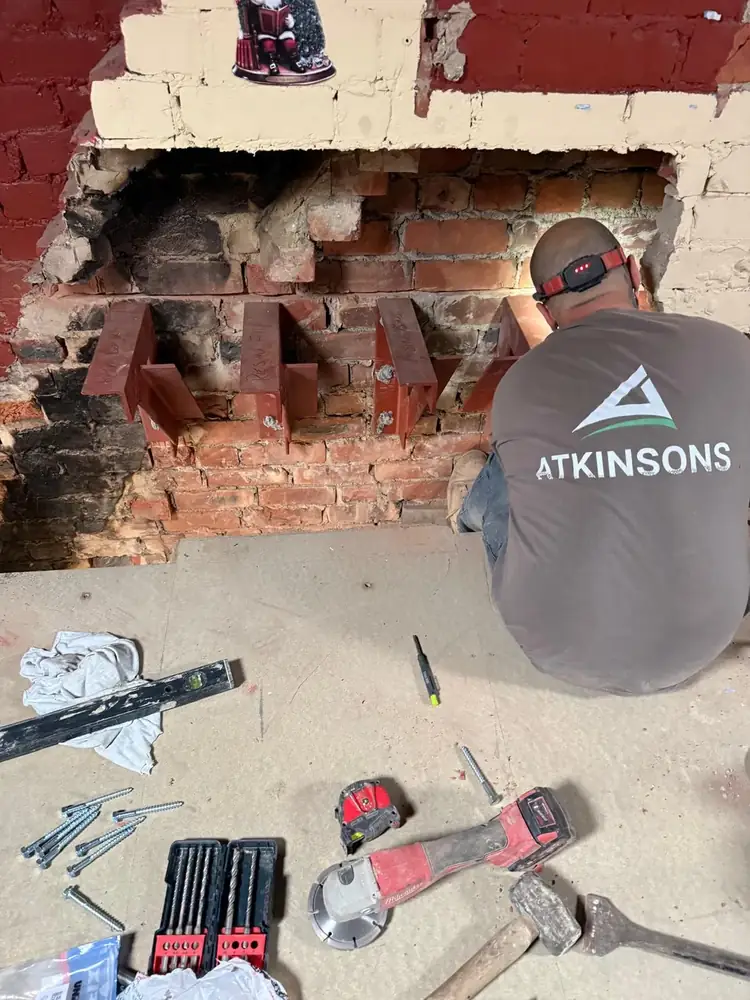
- Demolition, structural alterations and temporary works
- Hazardous substances, dust and silica
- Noise
- Vibration
- Manual handling
- Work equipment, plant and lifting
- Vehicles, driving and site traffic
- Fire safety and hot works
- Work in occupied premises and protection of the public
- Safeguarding
- Lone working and out-of-hours call-outs
- Personal protective equipment
- Welfare
- First aid
- Accidents, incidents and RIDDOR
- Emergency procedures
- Occupational health and health surveillance
- Mental health and wellbeing
- Drugs and alcohol
- Young persons and new and expectant mothers
- Training and competence
- Consultation and communication
- Specialist contractors
- Purchasing and supply chain
- Office work and display screen equipment
- Weather and environmental conditions
- Biological hazards
- Stop work authority
- Monitoring, inspection and audit
- Review
- Appendices
- A. Risk rating matrix
- B. RIDDOR quick guide
- C. Inspection and examination frequencies
- D. Training and competence matrix
- E. Legislation and guidance register
- F. Emergency contacts
- G. Related documents
Part 1: Statement of intent
ATKINSONS (NE) Limited builds, repairs and maintains homes, businesses and public buildings across the North East with its own directly employed trades. Every one of those jobs happens in someone's home, workplace or community. We will not accept that anybody should be hurt or made ill by our work.
So far as is reasonably practicable, we will:
- Comply with the Health and Safety at Work etc. Act 1974, the Construction (Design and Management) Regulations 2015 and all other relevant law, and treat the law as the minimum standard.
- Assess the risks from every job before it starts and remove or control them, following the hierarchy of control.
- Prepare site-specific risk assessments and method statements (RAMS) and brief them to everyone involved before work begins.
- Provide and maintain safe plant, equipment, access and places of work, and suitable welfare facilities.
- Make sure everyone who works for us is competent for the work they do, through recruitment, training, supervision and the right qualifications and registrations.
- Protect our customers, residents, members of the public and other trades from the effects of our work, with particular care for children and vulnerable adults.
- Control health risks, including asbestos, dust, noise, vibration and manual handling, and provide health surveillance where it is required.
- Consult our people on matters affecting their health and safety and give everyone the authority to stop work they believe is unsafe.
- Report, investigate and learn from accidents, incidents and near misses, and report to the HSE under RIDDOR.
- Support the physical and mental wellbeing of our people.
- Monitor how well we are doing, set objectives for improvement and review this policy at least once a year.
Responsibility for health and safety starts with me as Managing Director. I will provide the time, money and people needed to carry out this policy. Every Contracts Manager and supervisor is responsible for making it work on their jobs, and every employee has a duty to look after themselves and others and to follow the arrangements we put in place.
This statement, the organisation and the arrangements that support it are set out in full in our Health and Safety Policy (ATK-POL-01). A copy is available to every employee and to anyone who asks.
SignedDale AtkinsonManaging Director, ATKINSONS (NE) Limited
Date4 October 2026Next review: 4 October 2027
Part 2: Organisation and responsibilities
Health and safety is managed through a clear line of responsibility from the Managing Director to every operative on site.
Managing DirectorOverall responsibility
Competent H&S adviserNEBOSH qualified
Contracts ManagersResponsible on each job
Office & customer servicePlanning, records, lone worker check-in
Supervisors & lead tradesDay-to-day control on site
OperativesEvery employee
ApprenticesAlways supervised
Specialist contractorsSelected for competence
2.1 Managing Director Overall responsibility for health and safety
- Signs and owns this policy and the policy statement, and reviews them at least annually.
- Provides the resources, people, equipment and time needed to work safely.
- Appoints competent health and safety advice and makes sure it is acted on.
- Sets health and safety objectives and reviews performance at least quarterly.
- Leads by example on site visits and makes sure safety is never traded off against cost or programme.
- Ensures serious incidents are investigated and lessons are shared across the business.
2.2 Competent health and safety adviser NEBOSH-qualified advice
- Advises the Managing Director and managers on legal duties and good practice.
- Reviews RAMS for higher-risk work and supports supervisors in preparing them.
- Carries out planned and unannounced site inspections and audits.
- Leads accident investigations and advises on RIDDOR reporting.
- Keeps this policy, the legislation register and training matrix up to date.
2.3 Contracts Managers Responsible for health and safety on their jobs
- Make sure every job has a pre-start survey and site-specific RAMS before work starts.
- Plan the work, sequence the trades and allocate enough time, people and equipment.
- Carry out CDM duties on each job, including the construction phase plan where required.
- Visit sites regularly, check the RAMS is being followed and record inspections.
- Make sure operatives are competent, briefed and supervised.
- Report and help investigate accidents, incidents and near misses.
2.4 Supervisors and lead tradespeople Day-to-day control on site
- Prepare or complete the site-specific RAMS and brief it to everyone, collecting signatures.
- Set up and maintain safe working areas, barriers, access and welfare.
- Check plant, tools and access equipment before use and keep inspection records.
- Stop work and review the RAMS when conditions or the job change.
- Supervise apprentices and anyone new to the work.
- Report every accident, near miss and damage to the office the same day.
2.5 Operatives Every employee
- Take reasonable care of their own health and safety and that of others affected by their work.
- Follow the RAMS, site rules, permits and safe systems of work.
- Wear and look after the PPE provided.
- Use plant and equipment only if trained and authorised.
- Report hazards, defects, accidents and near misses straight away.
- Stop work and tell their supervisor if they believe something is unsafe.
2.6 Apprentices and young persons Under 18s and those in training
- Work under the supervision of a qualified tradesperson at all times.
- Do not carry out work they are not yet trained and assessed to do.
- Are covered by a specific young person risk assessment.
2.7 Office and customer service team Planning and communication
- Pass on hazard information from customers (asbestos, access, vulnerable occupants, pets) to the job team.
- Run the check-in arrangements for lone workers and out-of-hours call-outs.
- Keep training, certification, vehicle and equipment records up to date.
2.8 Specialist contractors Where specialist work is needed
- Licensed asbestos removal and some specialist services (for example scaffolding) may be carried out by specialist contractors.
- They are selected for competence, provide their own RAMS for review and follow our site rules.
Part 3: Arrangements
These arrangements set out how we put the policy into practice. Each section names who is responsible and the main law or guidance that applies.
3.1 Managing health and safety
We manage health and safety using the Plan, Do, Check, Act approach in HSE guidance HSG65. We plan the work and decide what good looks like, do it with competent people and the right controls, check how well it is working through inspections and measures, and act on what we learn.
- Plan: policy, objectives, risk assessment and RAMS for every job
- Do: competent people, briefings, permits, safe equipment and supervision
- Check: site inspections, audits, incident reports and KPIs
- Act: investigations, lessons learned, review of procedures and this policy
ResponsibleManaging DirectorLaw and guidanceManagement of Health and Safety at Work Regulations 1999; HSE HSG65
3.2 Risk assessment
Every job is risk assessed before it starts. Generic risk assessments cover our routine activities, and a site-specific assessment is prepared for each job to add the hazards of that site, that building and those people.
- Hazards are identified on the pre-start survey and scored for likelihood and severity (Appendix A)
- Controls follow the hierarchy: eliminate, substitute, engineering controls, administrative controls, then PPE
- High risks are designed out or reduced before work can start
- Assessments are reviewed when the work, team or conditions change, after an incident, and at least annually for generic assessments
- Specific assessments are made for young persons, new and expectant mothers, and lone workers
ResponsibleContracts Managers and supervisorsLaw and guidanceManagement of Health and Safety at Work Regulations 1999
3.3 Risk assessments and method statements (RAMS)
Site-specific RAMS are produced for every job, from a kitchen refit to a commercial fit-out. They set out the sequence of work, the hazards and controls, the people, plant and permits needed, and the emergency arrangements.
- Prepared by the supervisor or Contracts Manager, reviewed by the competent adviser for higher-risk work
- Briefed on site to every operative, who signs to confirm they understand it
- Kept on site and available to the client
- Work stops and the RAMS is updated if the job changes
- Sample RAMS for our main activities are published in our document library
ResponsibleSupervisorsLaw and guidanceManagement of Health and Safety at Work Regulations 1999; CDM 2015
3.4 Construction (Design and Management) Regulations 2015
CDM 2015 applies to all construction work, including work in people's homes. We make sure the right dutyholders are in place and carry out our duties as principal contractor or contractor.
- Where we are the only contractor, we act as contractor and prepare a construction phase plan proportionate to the risk
- Where more than one contractor is involved, we act as principal contractor when appointed, or when the domestic client duties pass to us
- For domestic clients, we take on the client duties as the regulations require
- We check whether the project is notifiable to the HSE (lasting more than 30 working days with more than 20 workers at the same time, or exceeding 500 person days) and make sure an F10 is submitted by the client
- We co-operate with designers, provide information for the health and safety file, and plan welfare from day one
HSE guidance used: L153 Managing health and safety in construction, and CDM guidance for domestic clients and small builders.
ResponsibleContracts ManagersLaw and guidanceConstruction (Design and Management) Regulations 2015
3.6 Permits to work
Some activities are only allowed under a written permit issued by a competent person, which sets out the precautions and is closed off when the work is complete.
| Activity | Permit and key precautions |
|---|
| Hot works (torches, cutting, welding, soldering where flammable materials are present) | Hot works permit, combustibles removed or protected, extinguisher at point of work, fire watch after work stops |
| Electrical isolation on commercial or shared systems | Isolation permit, lock-off and proving dead |
| Roof access on commercial premises | Roof access permit, fragile surfaces and edge protection confirmed |
| Confined spaces | Avoided wherever possible. Only with a specific risk assessment, permit and rescue plan, by trained people |
ResponsibleSupervisorsLaw and guidanceRegulatory Reform (Fire Safety) Order 2005; Confined Spaces Regulations 1997
3.7 Asbestos
Asbestos is the biggest single cause of work-related deaths in the UK, and many of the buildings we work in were built before it was banned. Nobody working for us disturbs a material that could contain asbestos until it has been checked.
- Refurbishment and demolition surveys obtained or arranged before intrusive work on pre-2000 buildings
- If suspect material is found, work stops, the area is closed off and the material is sampled
- Licensable asbestos work is carried out only by HSE-licensed contractors
- Non-licensed and notifiable non-licensed work only by trained operatives, with the correct controls, equipment and records
- Asbestos awareness training for all operatives, refreshed every year
ResponsibleContracts ManagersLaw and guidanceControl of Asbestos Regulations 2012; HSE L143
3.8 Work at height
Falls from height are the most common cause of fatal injury in construction. We avoid work at height where we can, prevent falls where we cannot, and minimise the consequences of a fall.
- Scaffolds erected, altered and dismantled by competent scaffolders, handed over with a certificate and inspected before first use, at intervals not exceeding 7 days and after events likely to affect stability
- Mobile towers erected and used by PASMA-trained operatives
- MEWPs operated by IPAF-trained operatives with a harness clipped to the basket anchor
- Ladders and stepladders only for short-duration, low-risk work, checked before use
- Fragile surfaces identified and protected, and nobody walks on them
- Edge protection, exclusion zones and debris control to protect people below
- Work stopped in high winds, ice or heavy rain
ResponsibleSupervisorsLaw and guidanceWork at Height Regulations 2005; HSE HSG33
3.9 Electrical safety
Electrical work is carried out only by competent electricians registered with NICEIC or NAPIT. Nobody works on or near live conductors unless it is unavoidable and specifically assessed.
- Safe isolation procedure on every job: isolate, lock off, label, prove the tester, test dead, re-prove
- Test instruments to HSE GS38, calibrated and checked
- Work to BS 7671, tested and certified before energising
- 110V reduced-voltage or battery tools on construction sites, with RCD protection where 230V is unavoidable
- Portable equipment inspected and tested in line with HSE HSG107
- Overhead and underground cables identified before work near them
ResponsibleElectrical supervisorsLaw and guidanceElectricity at Work Regulations 1989; BS 7671; HSE GS38 and HSG107
3.10 Gas safety
Gas work is carried out only by engineers on the Gas Safe Register for the type of work and appliance concerned.
- Gas Safe ID card carried and shown on request
- Tightness testing and purging before and after work
- Appliances commissioned and flues checked, with flue gas analysis
- Unsafe situations dealt with under the Gas Industry Unsafe Situations Procedure
- Carbon monoxide alarms recommended to customers
ResponsibleGas engineersLaw and guidanceGas Safety (Installation and Use) Regulations 1998
3.11 Excavations and underground services
- Utility plans obtained before digging and the area scanned with a cable avoidance tool by a trained operative
- Trial holes dug by hand to locate services
- Excavations deeper than 1.2 m supported, battered back or protected before anyone enters
- Excavations inspected at the start of every shift and recorded
- Barriers and covers to prevent falls, and spoil and plant kept back from the edge
ResponsibleSupervisorsLaw and guidanceCDM 2015 regulation 22; HSE HSG47
3.12 Demolition, structural alterations and temporary works
- Structural engineer calculations and Building Control approval before structural alterations
- Temporary works such as propping and needling designed, installed and checked before load is removed
- Demolition planned in writing to prevent uncontrolled collapse
- Services isolated and made safe before strip-out
ResponsibleContracts ManagersLaw and guidanceCDM 2015 regulations 19 and 20
3.13 Hazardous substances, dust and silica
Construction dust, especially respirable crystalline silica from cutting concrete, brick and stone, causes serious lung disease. We control it at source.
- COSHH assessments for hazardous substances, with safety data sheets available
- Less hazardous products chosen where possible
- On-tool extraction (M- or H-class) or water suppression for cutting, chasing and grinding
- RPE of at least FFP3 standard for dusty work, with face-fit testing for tight-fitting masks
- Exposure kept below workplace exposure limits in HSE EH40, including 0.1 mg/m³ for respirable crystalline silica
- Wood dust, lead, solvents and isocyanates assessed and controlled
ResponsibleSupervisorsLaw and guidanceControl of Substances Hazardous to Health Regulations 2002; HSE EH40
3.14 Noise
- Quieter methods and tools chosen where possible
- Noise assessed where exposure may reach the lower exposure action value of 80 dB(A)
- Hearing protection provided at 80 dB(A) and required at 85 dB(A), with hearing protection zones marked
- Health surveillance (audiometry) for those regularly exposed above 85 dB(A)
- Noisy work in homes and occupied buildings at agreed times
ResponsibleSupervisorsLaw and guidanceControl of Noise at Work Regulations 2005
3.15 Vibration
- Low-vibration tools bought and maintained
- Exposure estimated against the exposure action value of 2.5 m/s² A(8) and the limit value of 5 m/s² A(8)
- Trigger time limited and tasks rotated
- Health surveillance for those regularly exposed above the action value
- Symptoms such as tingling, numbness or whitening of fingers reported straight away
ResponsibleSupervisorsLaw and guidanceControl of Vibration at Work Regulations 2005
3.16 Manual handling
- Mechanical aids, hoists and sack trucks used where possible
- Loads split, team lifts planned and routes cleared
- Materials ordered in manageable sizes and delivered close to the work
- Manual handling training for all operatives
ResponsibleSupervisorsLaw and guidanceManual Handling Operations Regulations 1992
3.17 Work equipment, plant and lifting
- Equipment suitable for the task, maintained and checked before use
- Plant operated only by trained and authorised operatives holding the appropriate card
- Lifting equipment thoroughly examined every 12 months, and every 6 months for lifting accessories and equipment used to lift people
- Defective equipment tagged out of use and reported
- Guards and safety devices kept in place
ResponsibleSupervisorsLaw and guidancePUWER 1998; LOLER 1998
3.18 Vehicles, driving and site traffic
- Drivers hold the correct licence, checked on recruitment and periodically
- Vans serviced on schedule and checked daily, with loads secured and within weight limits
- No hand-held phone use while driving
- Journeys planned to avoid fatigue and unnecessary mileage
- Pedestrians and vehicles separated on site, with banksmen for reversing where needed
- Considerate parking that keeps pavements and junctions clear
ResponsibleOffice team and all driversLaw and guidanceRoad Traffic Act 1988; HSE INDG382
3.19 Fire safety and hot works
- Fire risk assessed as part of the RAMS, following HSE HSG168
- Hot works avoided where possible, otherwise under permit
- Escape routes, fire doors and alarms in occupied buildings kept working
- Fire extinguishers carried in vans and at the point of hot work
- Waste and flammable materials removed regularly
- Gas cylinders stored upright, secured and away from buildings at the end of the day
ResponsibleSupervisorsLaw and guidanceRegulatory Reform (Fire Safety) Order 2005; HSE HSG168
3.20 Work in occupied premises and protection of the public
- Work planned with the homeowner or site manager, with agreed hours, access and isolations
- Work areas barriered, signed and secured when unattended
- Tools and materials never left where residents, children or the public can reach them
- Dust, noise and disruption kept to a minimum
- Essential services restored or temporary supplies provided
- Pavements and roads kept clear, with permits for skips and scaffolds on the highway
ResponsibleSupervisorsLaw and guidanceHealth and Safety at Work etc. Act 1974 section 3
3.21 Safeguarding
- DBS checks for operatives working in care homes, schools and supported living, at the level the setting requires
- Operatives sign in, wear ID and are never left alone with residents or children
- Safeguarding concerns reported straight away under our Safeguarding Policy (ATK-POL-08)
ResponsibleContracts ManagersLaw and guidanceSafeguarding Vulnerable Groups Act 2006
3.22 Lone working and out-of-hours call-outs
- Lone working risk assessed, and high-risk tasks are never done alone
- Check-in with the office or emergency line on arrival and on completion
- Mobile phone carried and charged
- Authority to withdraw and escalate if a situation feels unsafe
- Out-of-hours call-outs logged with location and expected finish time
ResponsibleOffice team and supervisorsLaw and guidanceManagement of Health and Safety at Work Regulations 1999
3.23 Personal protective equipment
- PPE is the last line of defence, used after other controls
- Provided free of charge, suitable for the task and the wearer, and replaced when worn or damaged
- Minimum on construction sites: safety boots and hi-vis, with head, eye, hand, hearing and respiratory protection as the RAMS requires
- Training on correct use, storage and checks
ResponsibleSupervisorsLaw and guidancePersonal Protective Equipment at Work Regulations 1992 (as amended 2022)
3.24 Welfare
- Toilets, washing facilities with hot and cold water, drinking water, somewhere to eat and rest, and somewhere to dry clothes, in line with CDM 2015 Schedule 2
- In homes, welfare arrangements agreed with the customer or provided by us
- On larger sites, welfare units set up before work starts
ResponsibleContracts ManagersLaw and guidanceCDM 2015 Schedule 2
3.25 First aid
- First aid needs assessed for each job and for our premises
- First aid kits in every van and on every site
- Trained first aiders and appointed persons, identified at the RAMS briefing
- Nearest A&E recorded on the site-specific RAMS
ResponsibleOffice team and supervisorsLaw and guidanceHealth and Safety (First-Aid) Regulations 1981; HSE L74
3.26 Accidents, incidents and RIDDOR
- Every accident, near miss, dangerous occurrence and damage reported to the office the same day
- Accident book completed for injuries
- Investigations proportionate to the actual or potential harm, looking for root causes not blame
- Reportable incidents notified to the HSE under RIDDOR within the required time (Appendix B)
- Lessons learned shared through toolbox talks and RAMS updates
ResponsibleSupervisors, competent adviser and Managing DirectorLaw and guidanceRIDDOR 2013
3.27 Emergency procedures
- Emergency arrangements recorded in every site-specific RAMS
- Gas escape: no switches or flames, ventilate, evacuate, call 0800 111 999
- Service strike: keep clear, isolate if safe, contact the network operator (105 for power)
- Fire: raise the alarm, evacuate, call 999
- Serious injury: first aid, call 999, preserve the scene and inform the office
ResponsibleSupervisorsLaw and guidanceManagement of Health and Safety at Work Regulations 1999 regulation 8
3.28 Occupational health and health surveillance
- Health surveillance where required by law: noise (hearing), vibration (HAVS), respiratory sensitisers and dermatitis risks
- Face-fit testing for tight-fitting respirators
- Occupational health referral where work may be affecting someone's health
- Records kept confidentially
ResponsibleManaging DirectorLaw and guidanceManagement Regulations 1999 regulation 6; COSHH; Noise and Vibration Regulations
3.29 Mental health and wellbeing
- Construction has a high suicide rate and we take mental health as seriously as physical safety
- Managers trained to spot signs of stress and have supportive conversations
- Reasonable workloads, travel and hours planned
- Signposting to support services, including the Lighthouse Construction Industry Charity
- An open culture where people can speak up without fear
ResponsibleManaging Director and Contracts ManagersLaw and guidanceManagement Regulations 1999; HSE Management Standards for work-related stress
3.30 Drugs and alcohol
Nobody may work, drive or operate plant under the influence of drugs or alcohol. Our Drugs and Alcohol Policy (ATK-POL-11) sets out the rules, support available and the action we take.
ResponsibleAll employeesLaw and guidanceMisuse of Drugs Act 1971; Transport and Works Act 1992 (where relevant)
3.31 Young persons and new and expectant mothers
- Specific risk assessments for workers under 18, taking account of inexperience and immaturity
- Young persons kept away from prohibited high-risk work and always supervised
- Risk assessment reviewed when an employee tells us she is pregnant, has given birth in the last six months or is breastfeeding
ResponsibleContracts ManagersLaw and guidanceManagement Regulations 1999 regulations 16 to 19
3.32 Training and competence
- Competence checked on recruitment: qualifications, registrations and experience
- Induction for every new starter covering this policy, site rules and emergency arrangements
- Trade registrations maintained: Gas Safe, NICEIC or NAPIT, and industry cards appropriate to the trade
- Task training: asbestos awareness, manual handling, working at height, PASMA, IPAF, plant and first aid as required (Appendix D)
- Toolbox talks on site, at least monthly and after incidents
- Training records kept and refresher dates tracked
ResponsibleOffice team and Contracts ManagersLaw and guidanceManagement Regulations 1999 regulation 13; CDM 2015 regulation 8
3.33 Consultation and communication
- Employees consulted directly on health and safety matters, including new equipment, procedures and changes to work
- Toolbox talks, RAMS briefings and team meetings used to share information and listen
- Health and safety law poster displayed and given to employees
- Concerns can be raised with any manager, the competent adviser or the Managing Director, and under our Whistleblowing Policy
ResponsibleManaging DirectorLaw and guidanceHealth and Safety (Consultation with Employees) Regulations 1996
3.34 Specialist contractors
- Selected for competence and resources: accreditations, insurance, health and safety record and references
- Their RAMS reviewed before work starts
- Inducted to the site and our rules, and supervised
- Performance reviewed after the job
ResponsibleContracts ManagersLaw and guidanceCDM 2015 regulations 8 and 15
3.35 Purchasing and supply chain
- Health and safety considered when buying plant, tools, PPE and materials
- Safer and lower-hazard products chosen where available
- Suppliers expected to meet our standards, including our Modern Slavery Policy
ResponsibleOffice teamLaw and guidanceSupply of Machinery (Safety) Regulations 2008; PUWER 1998
3.36 Office work and display screen equipment
- Workstation assessments for regular DSE users
- Eyesight tests provided on request for DSE users
- Office fire risk assessment, first aid and emergency procedures in place
ResponsibleOffice teamLaw and guidanceHealth and Safety (Display Screen Equipment) Regulations 1992
3.37 Weather and environmental conditions
- Forecasts checked daily for outdoor and roof work
- Work stopped in high winds, lightning, ice or heavy rain where it affects safety
- Water, shade and breaks in hot weather, warm clothing and breaks in cold weather
- Sun protection advice for outdoor work
ResponsibleSupervisorsLaw and guidanceWorkplace (Health, Safety and Welfare) Regulations 1992
3.38 Biological hazards
- Precautions for sewage, drains and contaminated ground, including leptospirosis awareness
- Pigeon droppings, rodent infestations and mould assessed and controlled
- Needles and sharps not handled by hand, reported and removed safely
- Good hygiene and welfare with hot water for washing
ResponsibleSupervisorsLaw and guidanceCOSHH 2002
3.39 Stop work authority
Everyone who works for or with ATKINSONS has the right and the duty to stop any work they believe is unsafe, and to report it. Nobody will be criticised or disciplined for stopping a job in good faith on safety grounds.
ResponsibleEveryoneLaw and guidanceHealth and Safety at Work etc. Act 1974 sections 2 and 7
3.40 Monitoring, inspection and audit
We check that this policy is working through active monitoring (before things go wrong) and reactive monitoring (after they do).
| Activity | Who | How often |
|---|
| Pre-use checks of tools, plant and access | Operatives | Daily or before use |
| Site safety inspection | Supervisors | Daily on active sites |
| Contracts Manager site visit | Contracts Managers | Regularly through each job, recorded |
| Independent site inspection or audit | Competent adviser | Planned programme plus unannounced visits |
| Accident, incident and near-miss review | Managing Director and adviser | Monthly |
| Health and safety performance review | Managing Director | Quarterly |
| Policy and arrangements review | Managing Director | At least annually |
Key performance indicators
- Accidents, RIDDOR reportable incidents and accident frequency
- Near misses and hazard reports raised
- Site inspections and audits completed, and actions closed out
- RAMS briefed and signed before work starts
- Training and refresher compliance
- Toolbox talks delivered
- Health surveillance and face-fit testing completed
ResponsibleManaging DirectorLaw and guidanceHSE HSG65
3.41 Review
This policy is reviewed at least once a year by the Managing Director with the competent adviser, and sooner after a significant incident, a change in the law, a change in the work we do or the findings of an audit. Changes are briefed to all employees.
ResponsibleManaging DirectorLaw and guidanceHealth and Safety at Work etc. Act 1974 section 2(3)
Appendices
Appendix A. Risk rating matrix
Risk = likelihood (1 rare to 5 almost certain) x severity (1 minor to 5 fatal).
| Score | Rating | Action |
|---|
| 1 to 6 | Low | Proceed with the controls in the RAMS |
| 8 to 12 | Medium | Extra controls and closer supervision. Review before starting |
| 15 to 25 | High | Work does not start until the risk is reduced |
Appendix B. RIDDOR quick guide
| What happened | Report to HSE |
|---|
| Death of a worker or non-worker from a work-related accident | Without delay, by the quickest means, then within 10 days |
| Specified injury to a worker (for example fractures other than fingers, thumbs and toes, amputation, serious burns, loss of consciousness) | Without delay, then within 10 days |
| Worker incapacitated for more than 7 consecutive days (not counting the day of the accident) | Within 15 days of the accident |
| Non-worker taken directly to hospital for treatment | Without delay, then within 10 days |
| Reportable occupational disease (for example HAVS, occupational dermatitis, occupational asthma) | When a doctor's diagnosis is received in writing |
| Dangerous occurrence (for example collapse of scaffolding over 5 m, failure of lifting equipment, gas incidents) | Without delay, then within 10 days |
Over-3-day incapacitation is recorded in the accident book but not reported. Gas incidents are also reported by Gas Safe registered businesses under RIDDOR regulation 11.
Appendix C. Inspection and examination frequencies
| Item | Frequency |
|---|
| Scaffolding | Before first use, at intervals not exceeding 7 days, and after events likely to affect stability |
| Mobile towers | After assembly, before use and as scaffolding where in place for 7 days or more |
| Excavations | Start of every shift, and after events likely to affect stability |
| Ladders and stepladders | Pre-use check each time, and periodic detailed inspection recorded |
| Lifting accessories and equipment for lifting people | Thorough examination every 6 months |
| Other lifting equipment | Thorough examination every 12 months |
| Portable electrical equipment | User checks before use, formal inspection and testing in line with HSE HSG107 |
| Fire extinguishers | Visual check monthly, serviced annually |
| Vans | Daily walk-round check, serviced to the manufacturer schedule |
| First aid kits | Checked monthly and after use |
Appendix D. Training and competence matrix
| Role | Minimum training and competence |
|---|
| All operatives | Induction, site rules, asbestos awareness (annual), manual handling, fire awareness, RAMS briefing |
| Electricians | Recognised electrical qualification, BS 7671 current edition, inspection and testing, registered with NICEIC or NAPIT |
| Gas engineers | Gas Safe registration for each appliance category worked on, unvented hot water where relevant |
| Roofers and those working at height | Working at height, PASMA for towers, IPAF for MEWPs where used, harness training |
| Groundworkers and plant operators | CAT and Genny for service location, plant cards for each machine category |
| Supervisors | Site supervision safety training, RAMS preparation, accident reporting, first aid |
| Contracts Managers | Site management safety training, CDM 2015, temporary works awareness |
| Apprentices | Induction, supervised training plan, young person risk assessment |
Appendix E. Legislation and guidance register
- Health and Safety at Work etc. Act 1974
- Management of Health and Safety at Work Regulations 1999
- Construction (Design and Management) Regulations 2015 and HSE L153
- Work at Height Regulations 2005
- Control of Asbestos Regulations 2012 and HSE L143
- Control of Substances Hazardous to Health Regulations 2002 and HSE EH40
- Electricity at Work Regulations 1989, BS 7671, HSE GS38 and HSG107
- Gas Safety (Installation and Use) Regulations 1998
- Control of Noise at Work Regulations 2005
- Control of Vibration at Work Regulations 2005
- Manual Handling Operations Regulations 1992
- Provision and Use of Work Equipment Regulations 1998
- Lifting Operations and Lifting Equipment Regulations 1998
- Personal Protective Equipment at Work Regulations 1992 (as amended 2022)
- Regulatory Reform (Fire Safety) Order 2005 and HSE HSG168
- Reporting of Injuries, Diseases and Dangerous Occurrences Regulations 2013
- Health and Safety (First-Aid) Regulations 1981 and HSE L74
- Health and Safety (Consultation with Employees) Regulations 1996
- Confined Spaces Regulations 1997
- Workplace (Health, Safety and Welfare) Regulations 1992
- Health and Safety (Display Screen Equipment) Regulations 1992
- Safeguarding Vulnerable Groups Act 2006
- Building Safety Act 2022
- HSE HSG65 Managing for health and safety
- HSE HSG47 Avoiding danger from underground services
- HSE HSG33 Health and safety in roof work
ApprovedDale AtkinsonManaging Director, ATKINSONS (NE) Limited
Version2.0 · 4 October 2026Next review: 4 October 2027